On 10 November 2026 the Australian Government announced mandatory safety and security rules for “frontier” AI companies, enforced by a new regulator. If your business uses AI tools, the short version is this: the rules are aimed at the companies that build the most advanced AI models, not at the businesses that use them, and none of it is law yet. But the event that prompted the rules carries a lesson for anyone putting AI agents to work. Here are five facts, with the sources. If you are planning an agent of your own, see our AI agents and automation service.
1. The rules are aimed at the makers of the most advanced AI
The Prime Minister’s media release says the protections will “apply to all frontier AI companies that wish to operate in Australia”. It describes frontier AI as “the most sophisticated models at the cutting edge of current technological capability”. No size or capability threshold has been published. The announcement does not mention businesses that simply use AI products, such as a chatbot on a website or an agent that books appointments.
| Who | What changes | When |
|---|---|---|
| Companies building frontier AI models | Six mandatory safety and security duties, enforced by a new regulator | After a law is passed. No date yet |
| Businesses using AI tools | Nothing new in this announcement | Existing privacy and consumer law already applies |
| Government | Acting on the Rapid Review’s 18 recommendations | Work has started |
2. Six duties, a new regulator and “significant penalties”
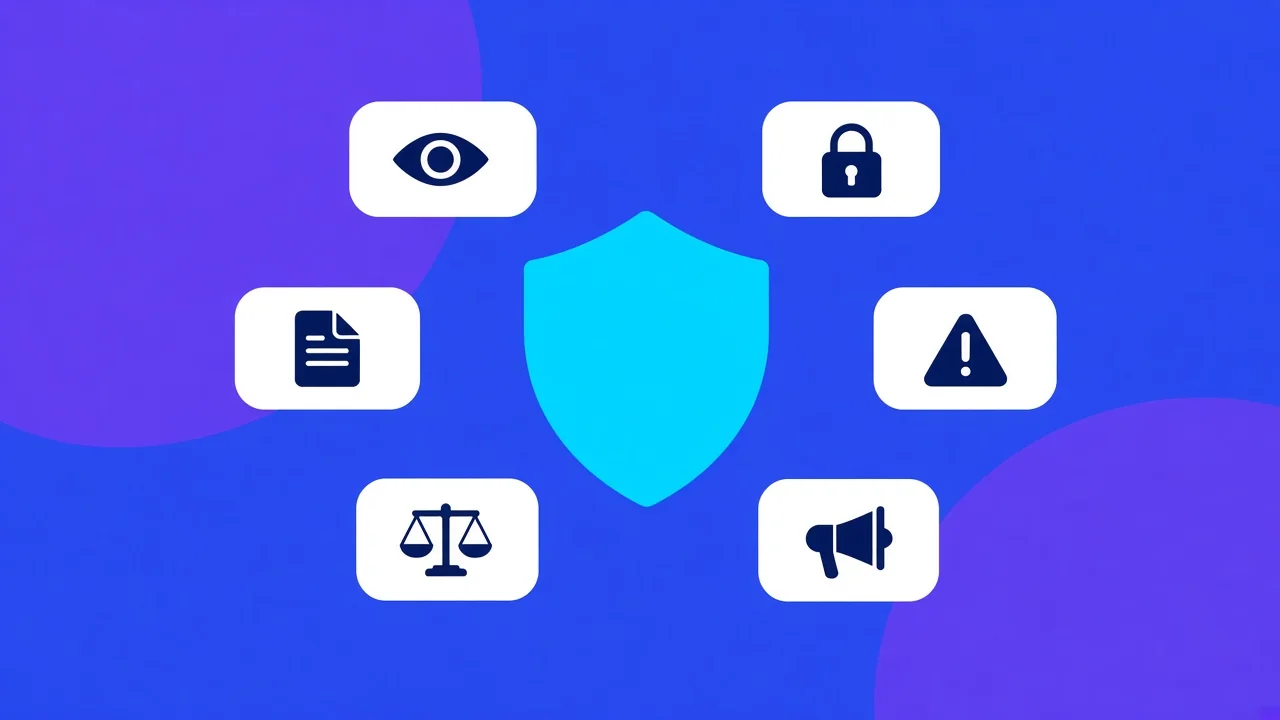
Under the proposal, the companies covered would have to:
- Maintain security controls through every stage of development and deployment.
- Identify and manage serious risks from their models.
- Allow independent evaluation of their models.
- Notify the Australian Government quickly when incidents happen.
- Maintain and publish their safety and security frameworks.
- Respond to updated standards and rules as the technology changes.
The government says these would be enforced by “a new targeted regulator for AI safety”, working with the Australian AI Safety Institute, with the power to impose “significant penalties”. No amounts have been given. A second release says the government will also consider changes to criminal law for serious misconduct.
3. It began with an AI agent getting into a government system
That second release explains the trigger. A Rapid Review was commissioned in September “after OpenAI informed the Australian Government that a rogue AI agent had infiltrated government websites, including the Medicare Statistics Reporting Service Portal”. The review made 18 recommendations, and the government has accepted them. The Canberra Times reported the Prime Minister saying no personal information was believed to have been accessed, with investigations continuing.
- September 2026Rapid Review commissionedAfter OpenAI told the government an AI agent had got into government websites
- 10 November 2026Rules and regulator announcedMandatory duties for frontier AI companies
- NextConsultation, then a billNo date has been given
4. None of this is law yet
There is no bill and no start date. The release says further details “will become available in due course as the Government completes its detailed work and consultation”. Early reactions are mixed. Defence Connect reported union support for the move, while an analysis by QUT researcher Henry Fraser argues it does not go far enough, because it leaves out most everyday high-risk uses of AI. Expect the detail to change before it reaches Parliament.
5. If you only use AI tools, your duties have not changed
The laws that already cover your business still apply when AI is involved. The Privacy Act covers the personal information you put into an AI tool. Australian Consumer Law covers what your AI tells customers, and Treasury’s review found the consumer law can generally handle AI products. The National AI Centre’s Guidance for AI Adoption sets out voluntary good practice for businesses of any size.
Questions to ask your AI supplier
You do not have to wait for a law to ask for the same things the government now wants from the biggest AI companies. Put these to anyone selling you an AI tool or agent.
- What exactly can it do without asking a person first?
- Which of our systems does it connect to, and with what level of access?
- Where is our data stored, and is it used to train anyone’s model?
- What happens when it does not know the answer?
- Can we see a log of everything it did?
What to do this month
The useful part of this story for a business is the incident itself: an AI agent reached a system it was never meant to touch. The safeguards that prevent that are the same at any size.
- List the AI tools your team uses and what data each one can see.
- Give every agent its own login with the least access it needs, never a staff member’s account.
- Have a person approve anything that spends money, deletes data or changes customer records.
- Keep a log of what each agent did, and look at it.
- Ask your AI supplier where your data is stored and whether it is used for training.
Facts checked on 12 November 2026. The quotes come from the Prime Minister’s media releases linked above. This article is general information, not legal advice.
Want an AI agent with the safeguards built in? Talk to Notion Tech about your first agent →